CUWB features two distinct modes: MultiRange™ and MultiTime™. Selecting the right operational mode is essential for balancing system capacity, battery life, and installation complexity.
MultiRange™: The Flexible Solution
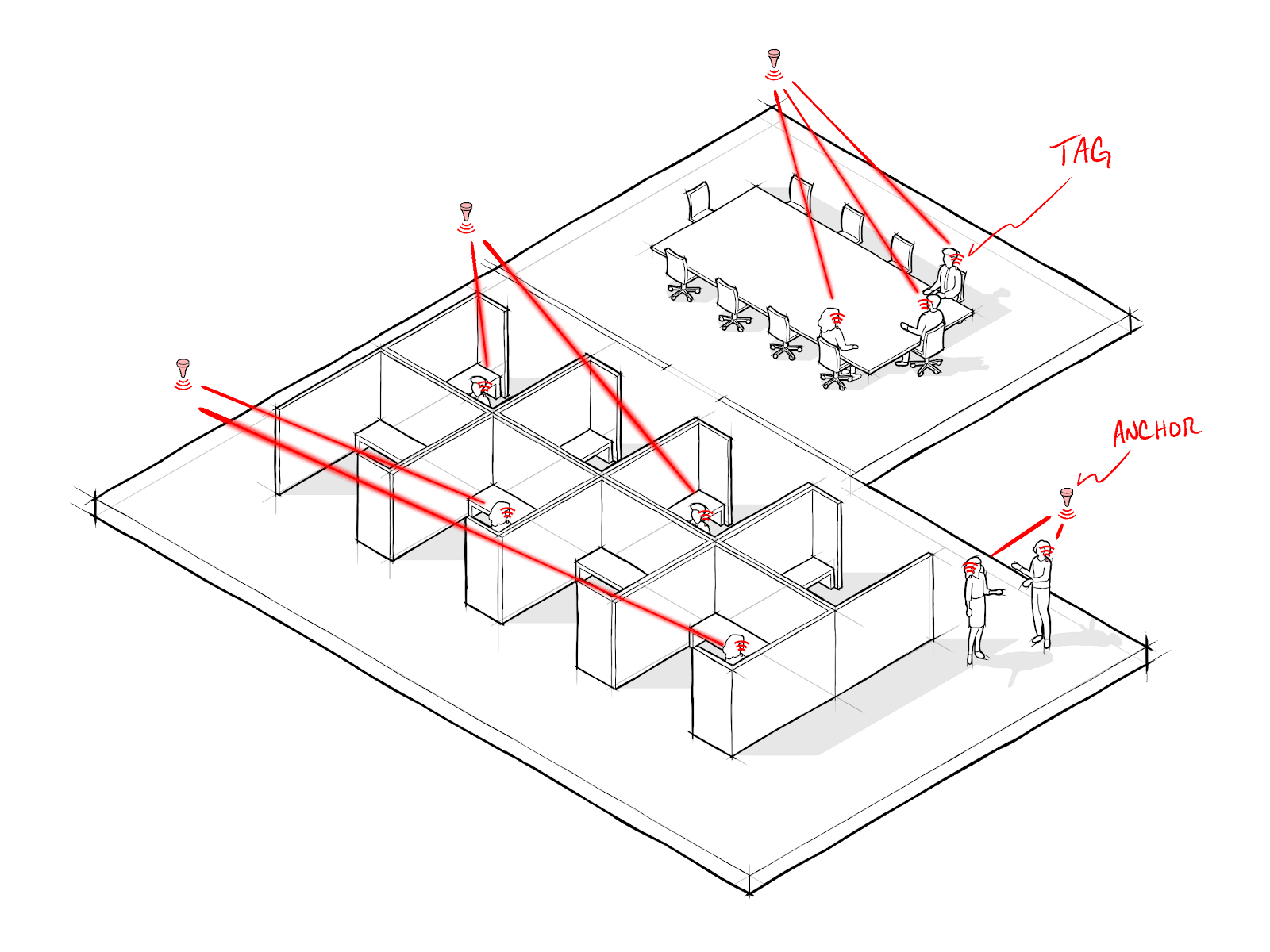
MultiRange utilizes a Two-Way Ranging (TWR) algorithm to calculate the distance between tags and anchors. In this mode, tags do not have a synchronized schedule but instead "beacon" independently. Each tag maintains its own schedule, introducing slight timing variations – or jitter – to reduce the risk of airtime conflicts.
When to Use:
Quick Deployments: MultiRange is highly tolerant of survey errors, making it ideal for environments where a precise anchor survey is difficult or time-consuming.
Disconnected Infrastructure: MultiRange doesn’t require anchor synchronization, enabling ‘disconnected’ coverage areas that are physically separate or outside of RF range of each other.
Small to Mid-Sized Installations: Well-suited for systems with a lower density of anchors and tags in applications that do not have a requirement for extremely high beacon rates.
MultiTime™: The High-Performance Powerhouse
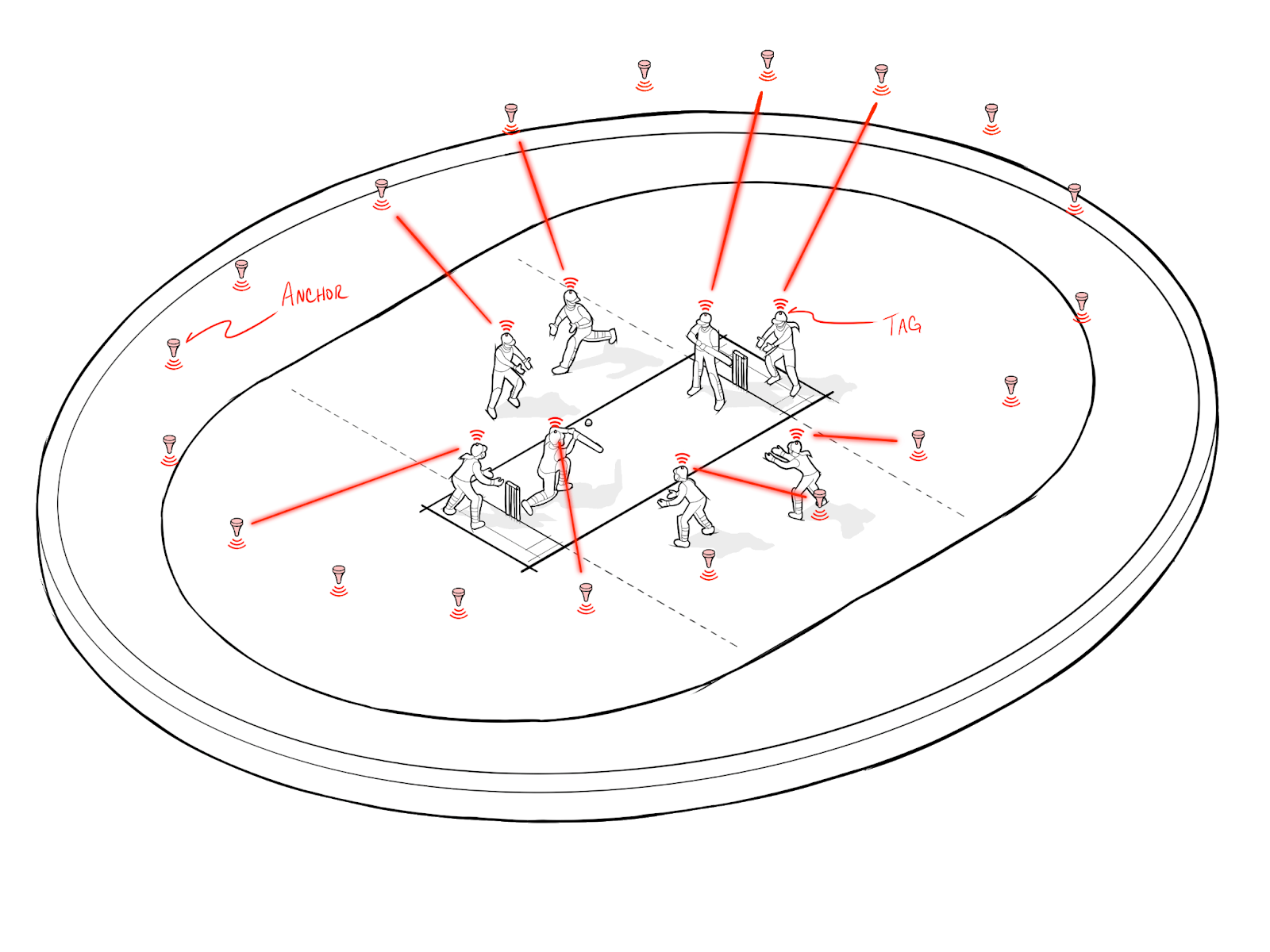
MultiTime is based on the Time-of-Arrival (ToA) algorithm and is a fully scheduled system. The CUWB Engine provides a fixed schedule to the tags, which eliminates UWB airtime conflicts and allows the system to support a much larger number of tags simultaneously.
When to Use:
High-Density Tracking: Capable of up to 3,300 Locates Per Second (LPS) in a single coverage area, making it a good choice for enterprise or commercial installations with thousands of devices.
High Performance: Fast beacon rates (over 20Hz) support applications with dynamic tag movement that require low-latency and high-accuracy. High beacon rates allow the system to smooth measurements for greater precision without slowing down update times.
Extended Battery Life: Because a location is determined from a single tag transmission, MultiTime offers lower power consumption and longer battery life.
The Solution is in your Application
The choice comes down to infrastructure and application needs. Further information and example scenarios can be found in the CUWB Documentation Deployment Considerations, and Deployment Examples. Applications include:
Scenarios where MultiRange might be selected:
Environments with many small, separated areas, such as office cubicles, hospital rooms, or classrooms.
Applications with slower-moving objects, fewer devices, and less strict surveying requirements, such as smart vacuums.